The handbook and archive your organisation can trust.
Cairnbook keeps your team's pages, policies and back issues in one place, with an owner and a review date on every page, and search that finds the paragraph you need.
Or look around as
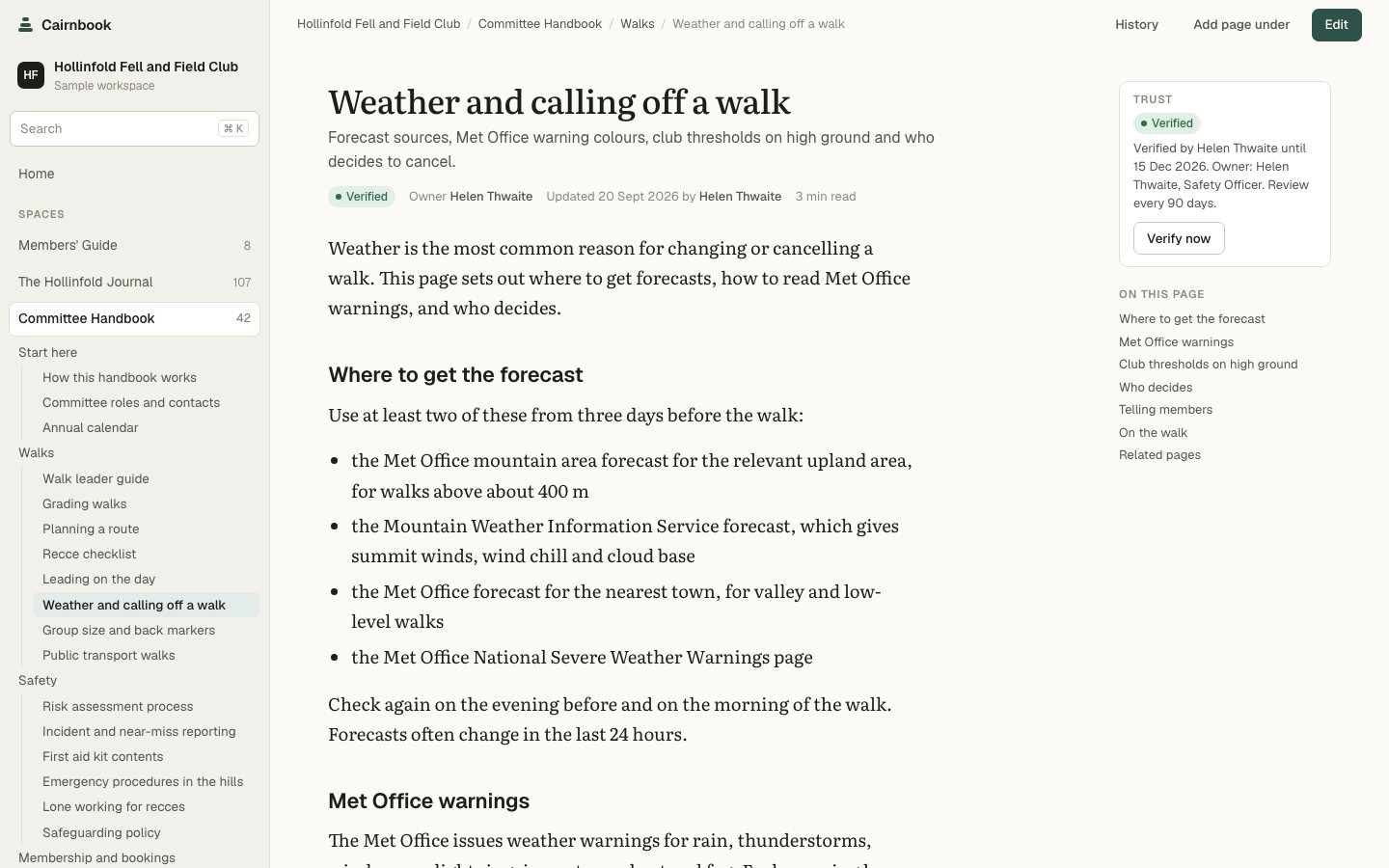
Search
Finds the paragraph, not just the page.
Press Ctrl K anywhere and start typing. Results appear as you type, with the matching words highlighted in context and titles ranked above passing mentions. Open a result and every match on the page is highlighted, with a counter to step through them.
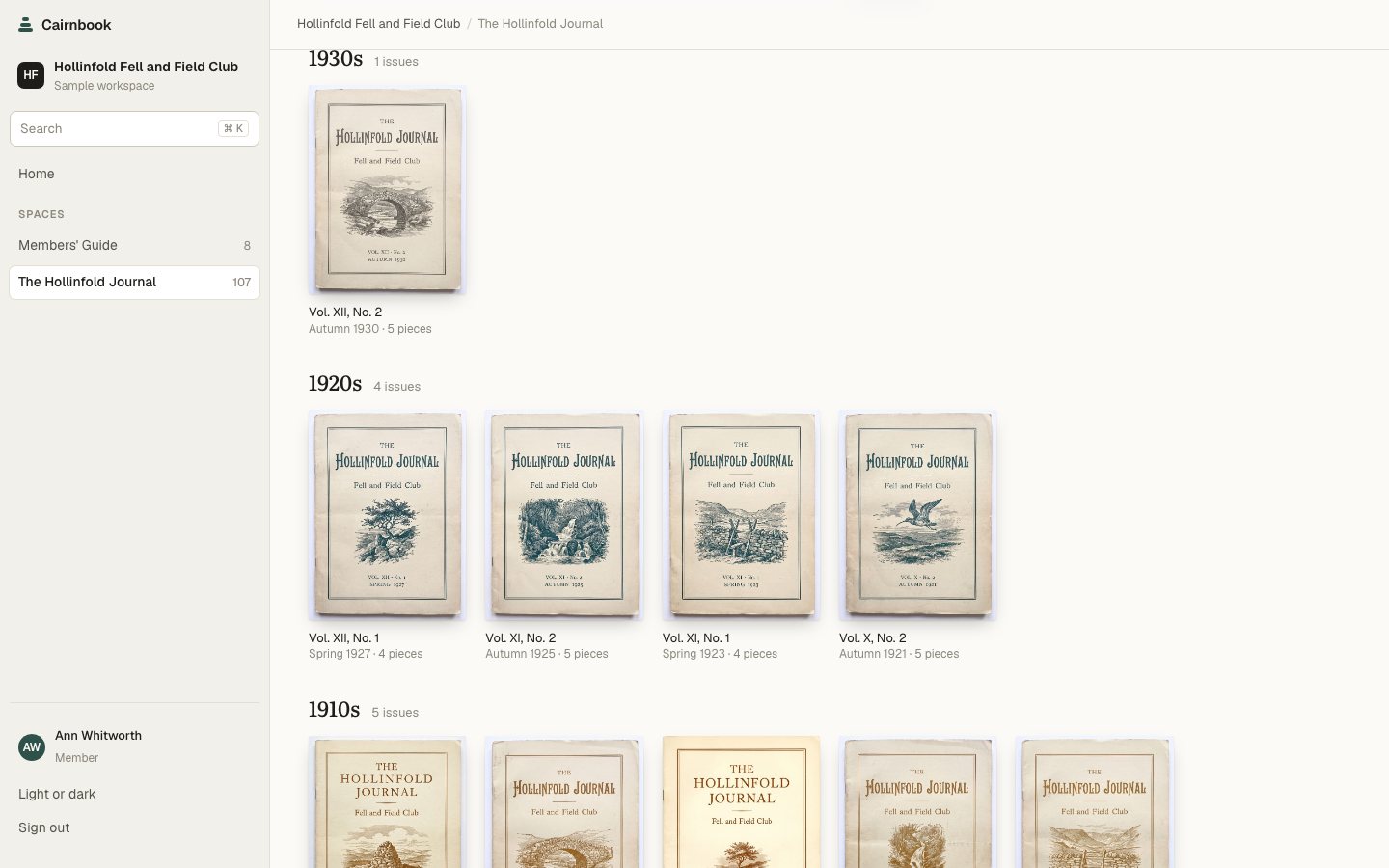
When a search finds nothing, Cairnbook records it. Admins see what people looked for and did not find, with a button to write the missing page.
- Full-text search with word stemming, so "walk" also finds "walking"
- Filters by space, decade and author
- "Did you mean" suggestions for misspelt titles
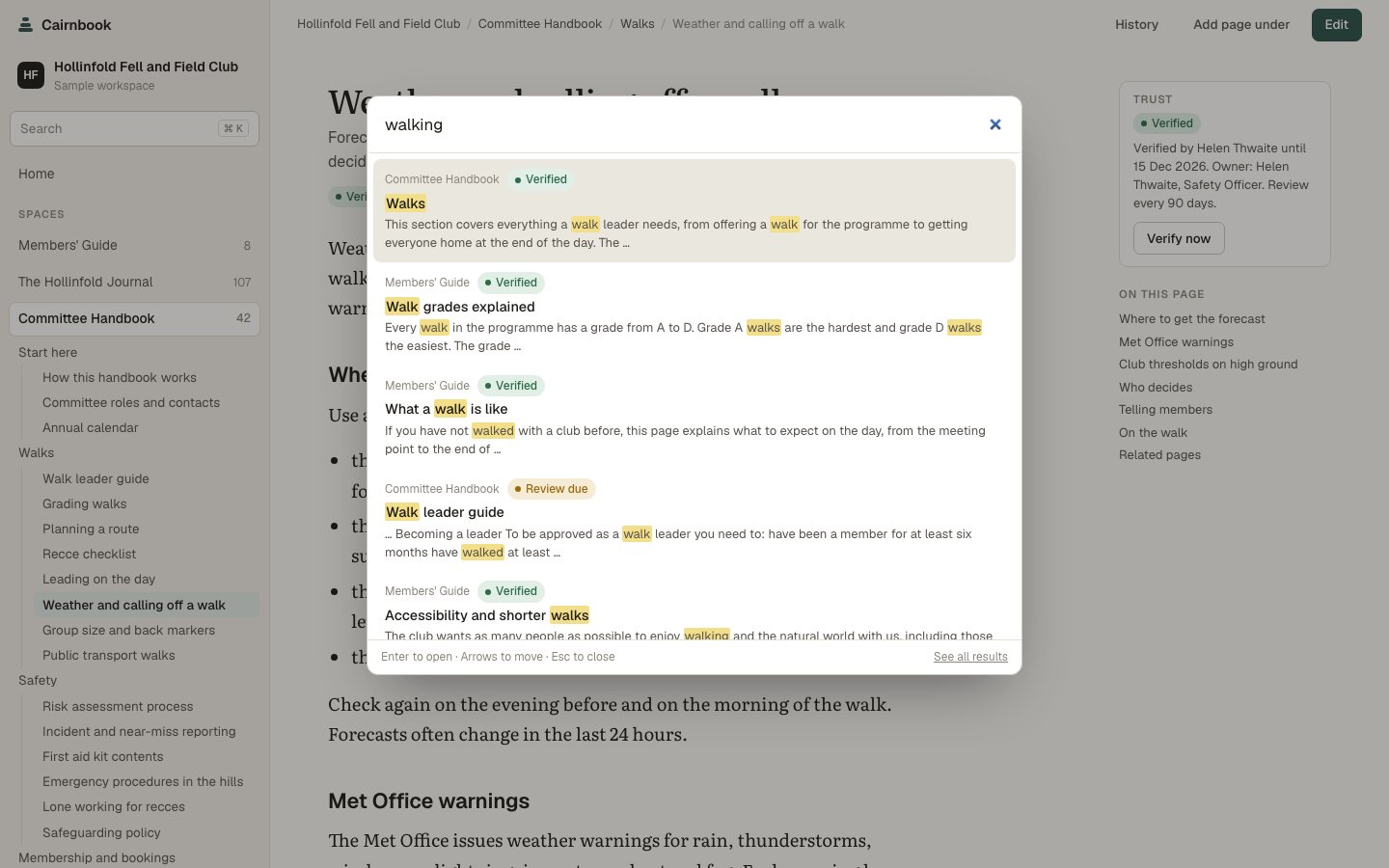
Trust
Every page has an owner and a review date.
Pages are verified by the person responsible for them, for 90, 180 or 365 days. Readers can see at a glance whether a page is current. Owners get their pages back when the review date comes round.
The admin view shows a single trust score for the whole workspace, with the pages that have expired, are about to, or have nobody looking after them.
- Version history with a line-by-line comparison and one-click restore
- Templates for policies, plans, minutes and reports
- Links between pages, with a "Linked from" list on each one
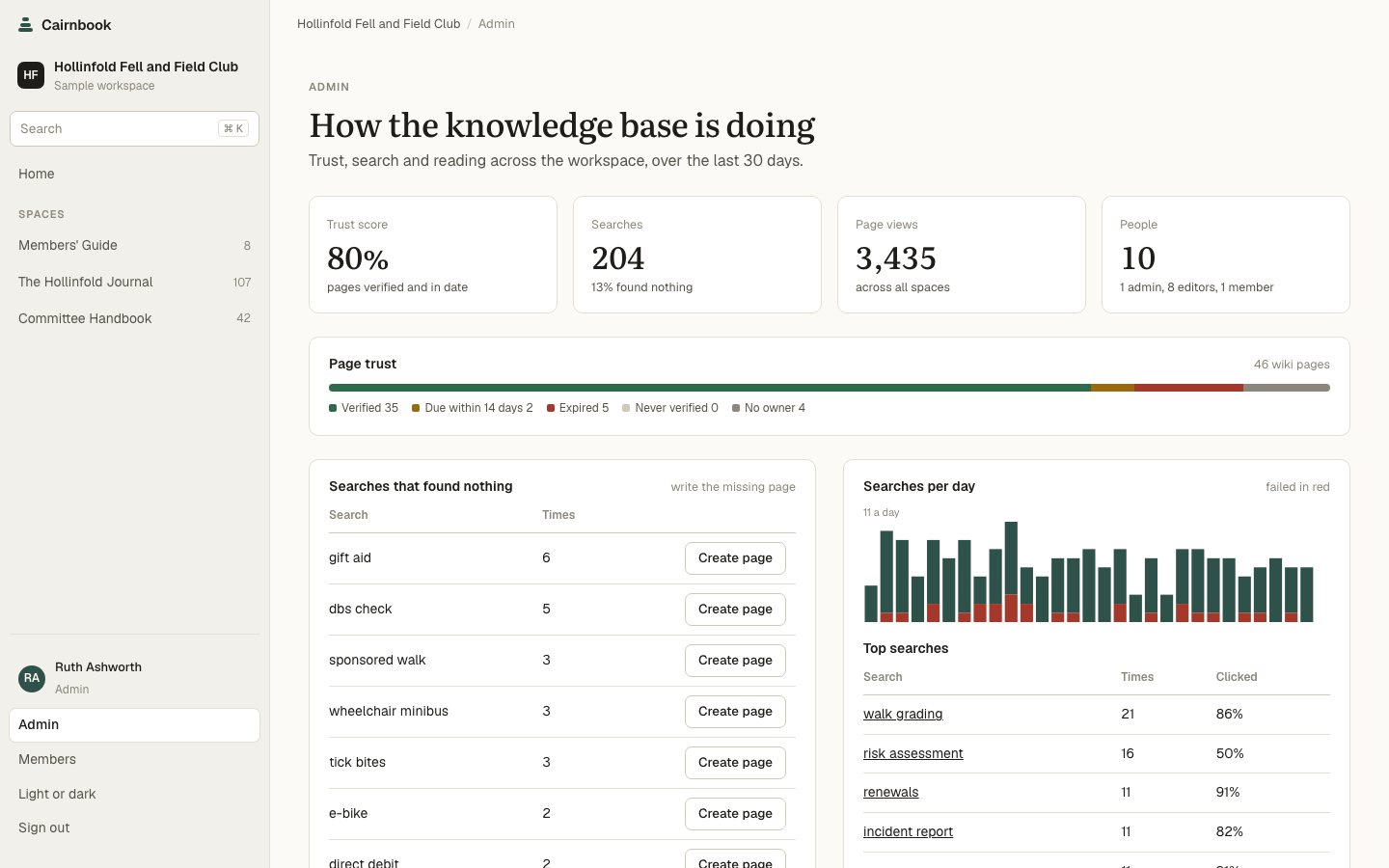
Archive
Back issues people actually read.
Most organisations keep their old journals and newsletters as a list of PDF links. Cairnbook turns them into a shelf of issues by decade, each with a contents page and a clean reading view for every article.
Members pick up where they left off, search every issue at once, and cite a piece with one copy. Pieces for members only are listed with a summary, so visitors can see what joining gives them.
- Issue shelf grouped by decade, with contents pages
- Reading progress and "continue reading"
- Public and members-only articles in the same archive
For teams writing down how they work
Processes, policies, onboarding and how-to guides, kept current by the people who own them. Editors write; everyone else can read and search.
For clubs, societies and publishers with an archive
A members' archive of journals, newsletters or reports that can be searched, read on a phone and shared by link, beside the organisation's own handbook.